Artist Leah Smith Explores Connections Between Nature, Material, and Human Thought

Artist Leah Smith Explores Connections Between Nature, Material, and Human Thought
The Canton, NC-based artist approaches her work intuitively and without a singular message in mind.

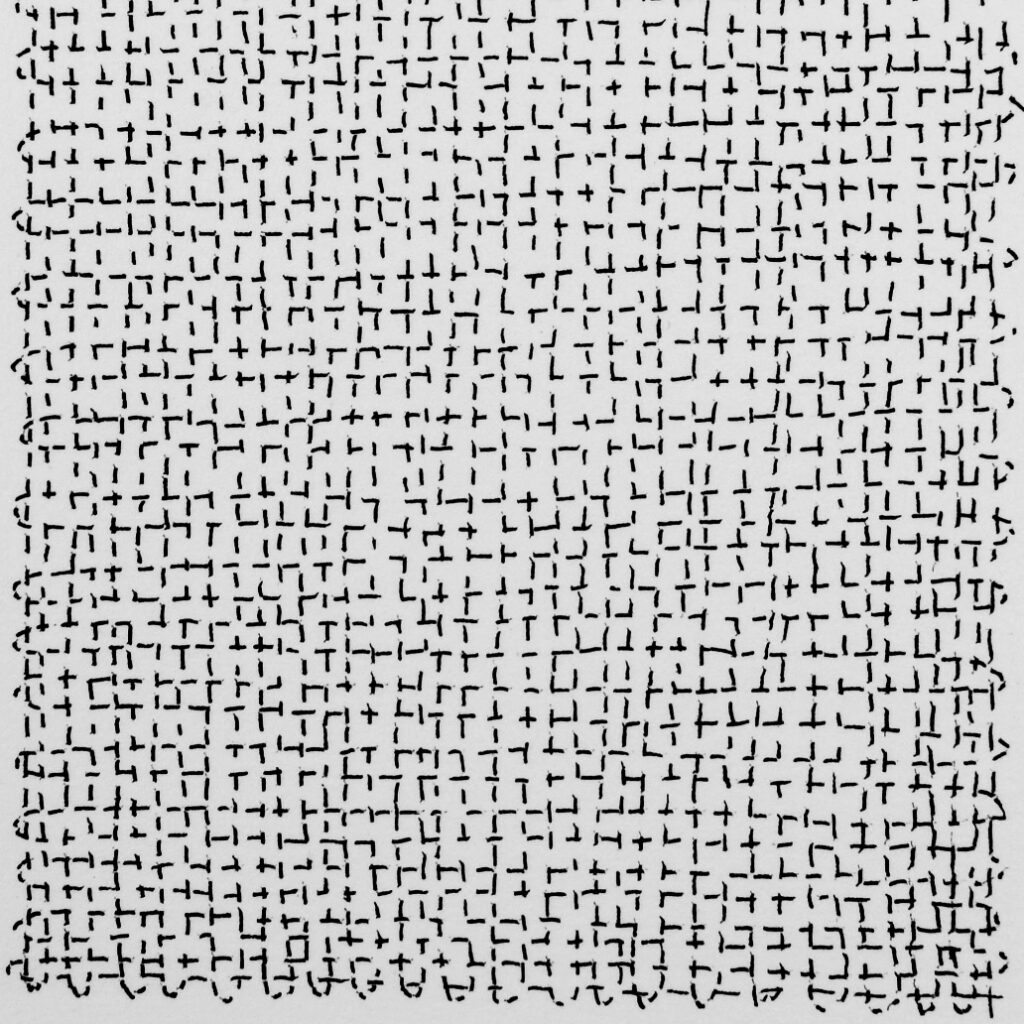
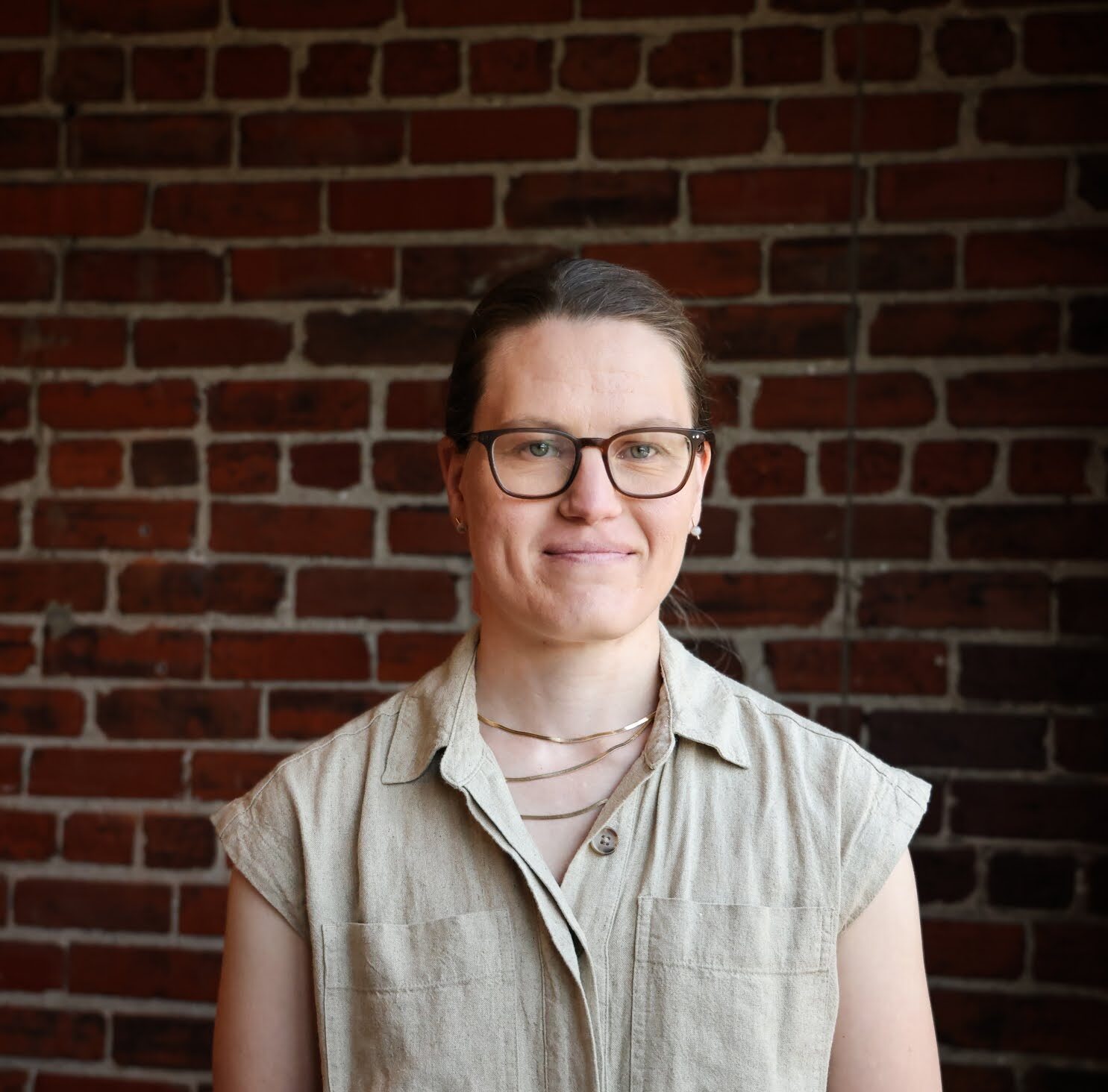
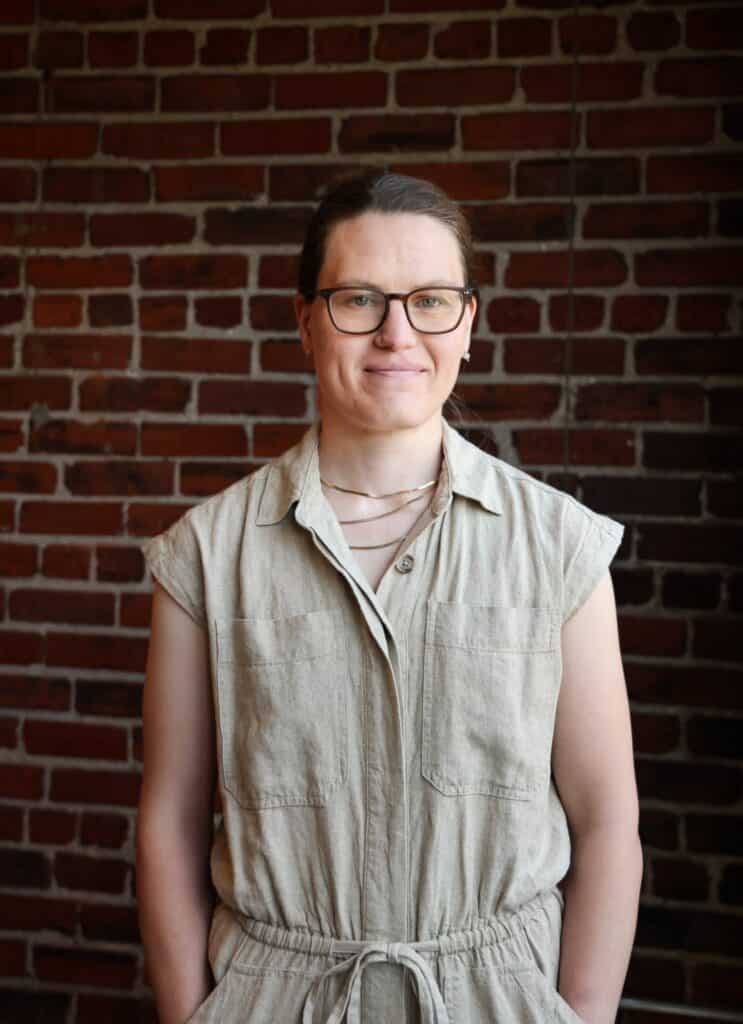
Leah Smith was born on the west coast, raised in Colorado, and is now based in western North Carolina. Her works incorporate techniques and practices that convey historical connections between the natural world, material, and human thought. Smith’s creative process is distinct, utilizing slow progression and celebrating the natural imperfections that she then relates to every part of nature.

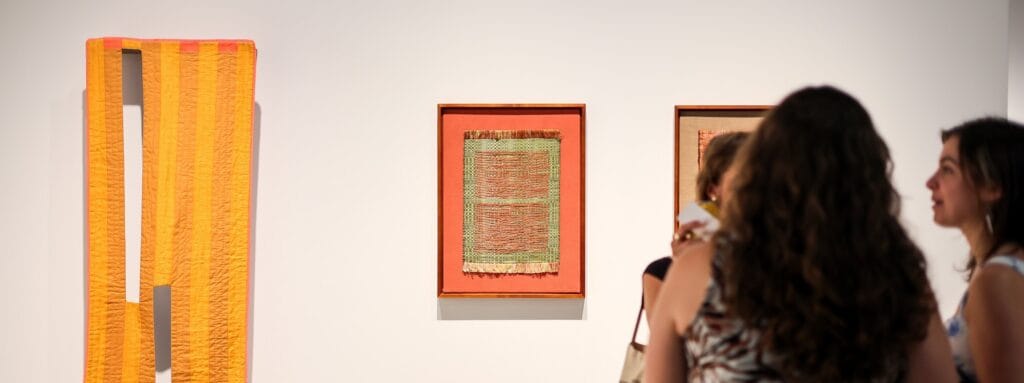
Find drawn and woven works by Smith in Process as Practice: Three Artists from Western NC, on view at NCMA Winston-Salem Downtown from September 17 until November 29, 2026.
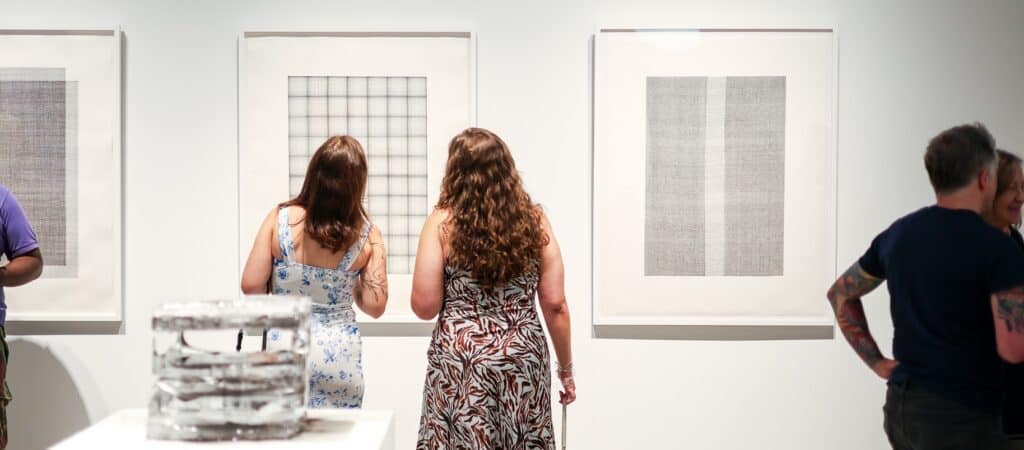
Installation view of Process as Practice at NCMA Winston-Salem Downtown

ARE THERE ANY PARTICULAR EXPERIENCES IN YOUR LIFE THAT HAVE INFLUENCED YOUR CURRENT WORK?

I grew up in the West, outside of Denver, Colorado, and I had a lot of early experiences of feeling small in a vast landscape, which impacted me deeply. For a few years, we lived in a suburban neighborhood where there was a ridge you could walk out to, and look out along the front range of the Rockies. You could see probably 100 miles. I’d hang out there for a while after school nearly every day, watching the light and the clouds. Even though I don’t generally work directly with the landscape as subject matter these days, my work is always looking for a place in the larger picture, a connection to something vast, and I’m still interested in evoking that sense of gradual unfolding that exists in nature.

WOOD, WOOL, COTTON, AND INK ALL REQUIRE MULTIPLE SENSES TO EXPERIENCE. HOW DO THESE MATERIALS AFFECT YOUR ATMOSPHERE AND STATE OF MIND WHEN CREATING?

I think I don’t do any process in my work that’s not tactile or haptically pleasing. That’s very important to me. Maybe to keep myself engaged, but I think the way the work feels when you’re making it somehow comes through when you look at it, even if the viewer isn’t touching it. That’s definitely a piece of my practice that’s really important; I feel like I’m more tactile and process-oriented than visual. Obviously, the visual is very important because these things eventually go on a wall and people are going to be looking at them, but when I’m composing or thinking of ideas for work, it’s more about curiosity about how something is going to work. I’m interested in the process of creating it.

YOU’VE DESCRIBED YOUR WORK AS A SLOW, TIME-CONSUMING PRACTICE, EVEN AS SOCIETY MOVES TOWARDS AI, AUTOMATION, AND INSTANT GRATIFICATION. DO YOU THINK OF YOUR PRACTICE AS A FORM OF QUIET PROTEST AGAINST THE MODERN DESIRE FOR EFFICIENCY?

I think I was making anti-AI art before AI was a thing! I think my work is an affirmation of labor, to some extent, and thinking about what we’re spending our time on and what we’re paying attention to. It’s an affirmation of the importance of being grounded in your body, and the body being a part of thinking and fundamental to experience. I guess, when you say it like that, it seems incredibly obvious, but I think it’s easy to forget, in our digital world where we live on screens and, increasingly, people are outsourcing their thinking to robots. We lose a part of humanity as we become more inundated with technology.

WHAT ARE YOU LEARNING ABOUT YOURSELF THROUGH YOUR ARTISTIC PRACTICE?

My practice teaches me to pay attention, and in turn shows me how I fit into the world and illuminates my curiosity. Sometimes it teaches me my limits — of patience, notably! The limit is high, but it’s there. Art really is a way of getting to know myself, as I suspect it is for all artists. I’m always uncovering what’s important and what I care about through the work itself, as well as through the work of maintaining a creative practice.
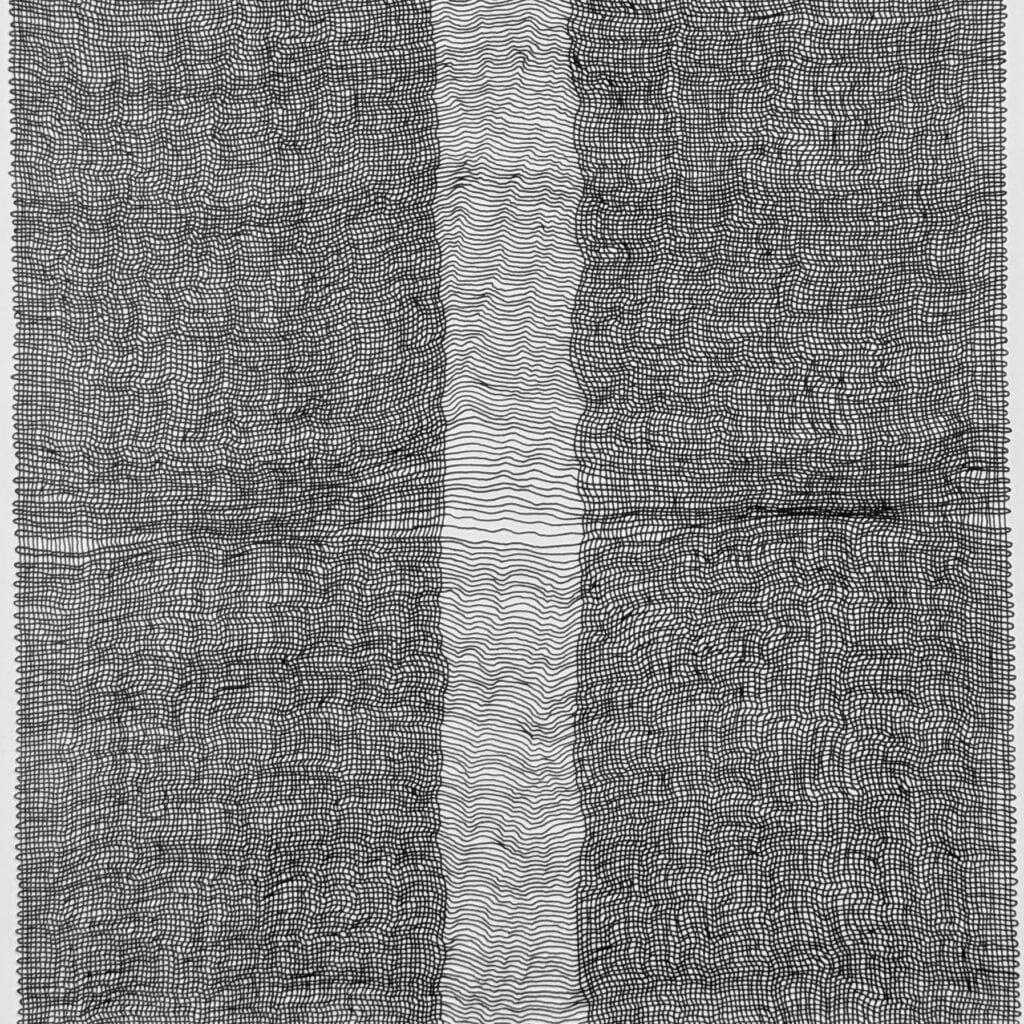
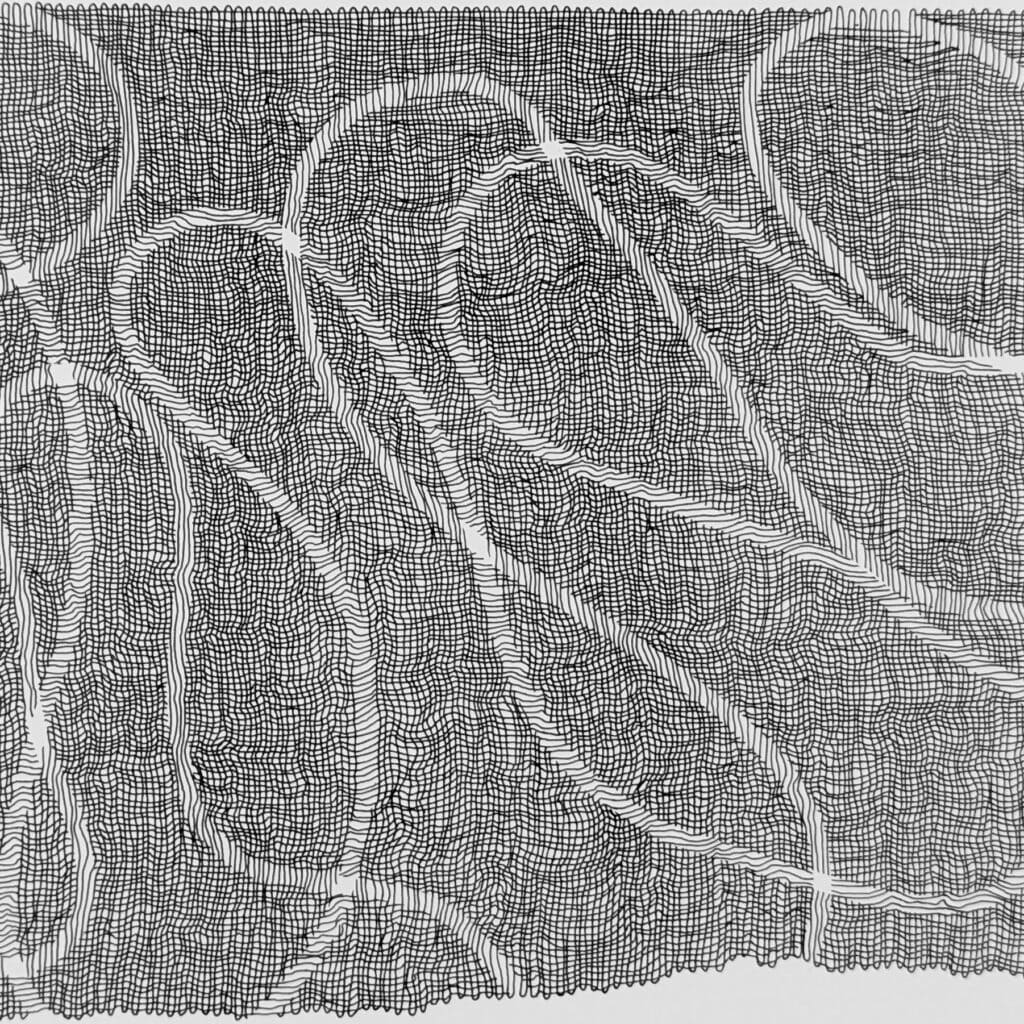
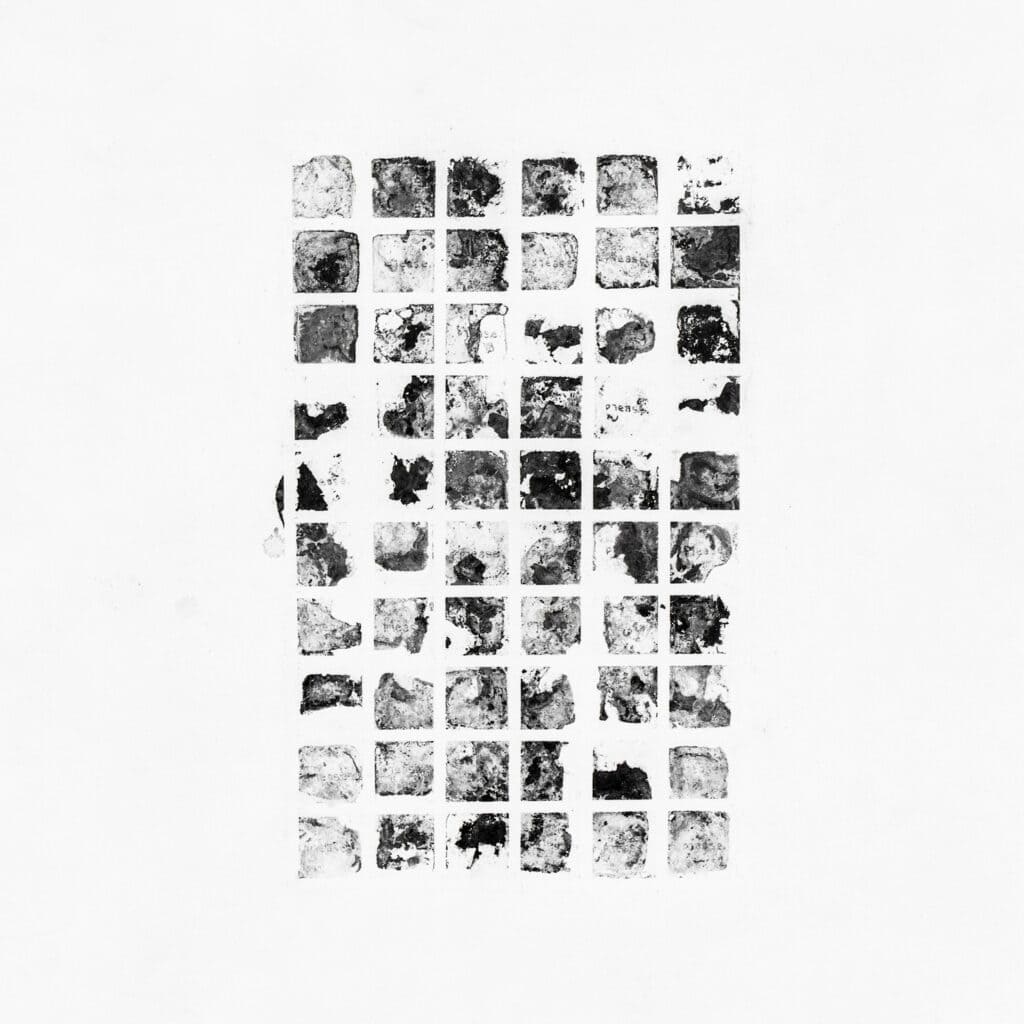
Leah Smith, Rift 5.5.2024 (detail), 2024, ink on paper. © Leah Smith. Courtesy of the artist.
Leah Smith, Tangle III 9.8.2024 (detail), 2024, ink on paper. © Leah Smith. Courtesy of the artist.
Leah Smith, Cipher 2.11.2025 (detail), 2025, ink on paper. © Leah Smith. Courtesy of the artist.

Related Exhibitions

Related Exhibitions

Kimberly English’s Creative Practice is Inspired by Ecological Processes and Southern Identity

Kimberly English’s Creative Practice is Inspired by Ecological Processes and Southern Identity

The Asheville-based artist brings together traditional Southern Appalachian weaving practices to explore individual and collective identities.

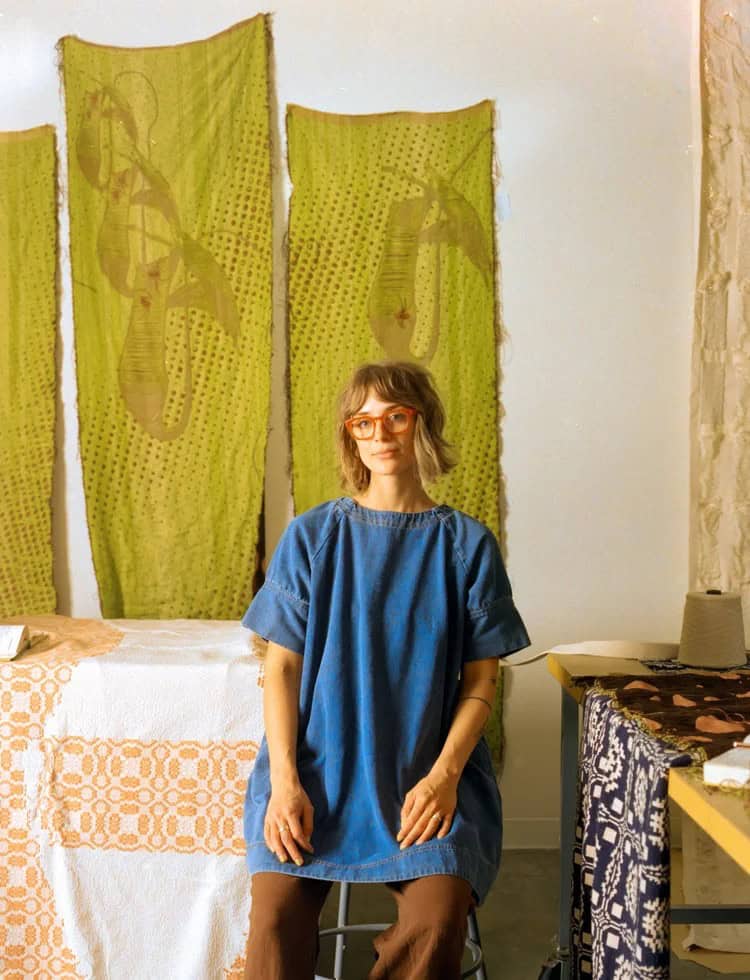
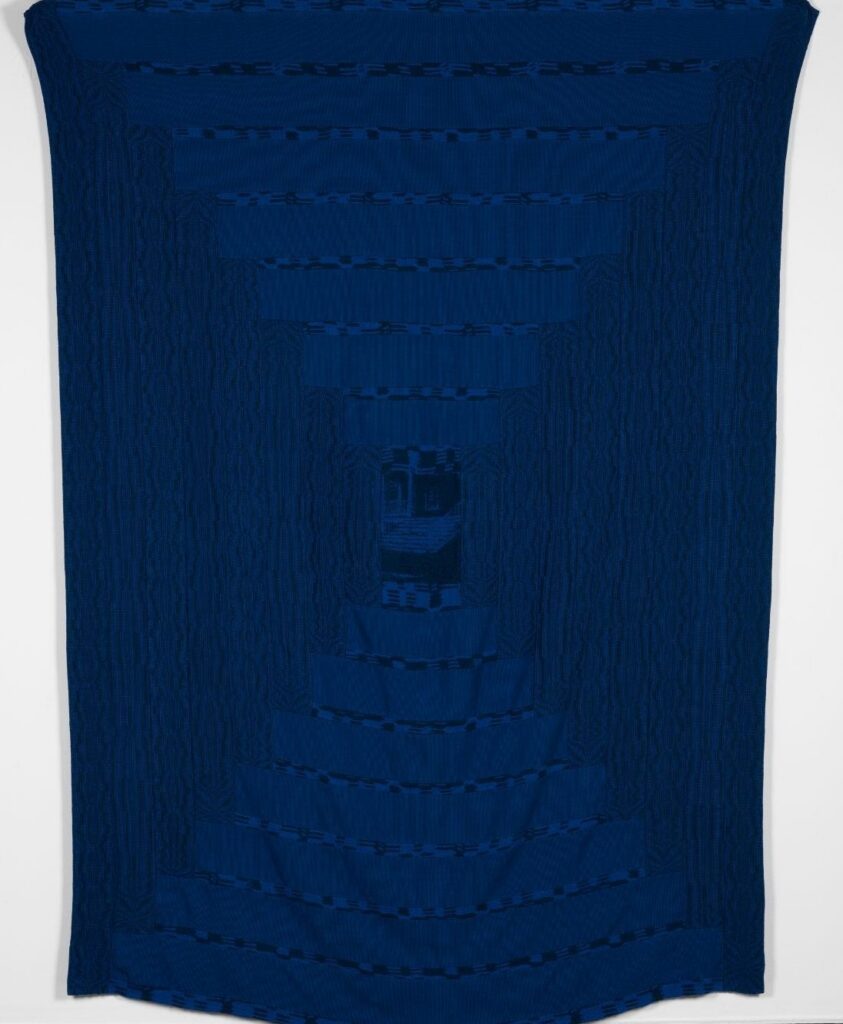
Kimberly English grew up in rural Georgia with craft hobbyist parents who inspired her exploration of material-based art. During her time at SCAD, English took a fiber class and found a format to think through thread. Now, her works reflect southern Appalachian traditions in weaving and textile work, particularly the overshot coverlet pattern marked by a colored wool weft that floats over a neutral linen or cotton warp, with designs passed down through generations.

Through her work, English explores narratives of the American South and globalized labor through identity, patriarchy, memory, and reconciliation. Her pieces reflect on the transitional space between past and present, weaving together personal and collective memory.

Find vibrant textile works by English in Process as Practice: Three Artists from Western NC, on view at NCMA Winston-Salem Downtown from September 17 until November 29, 2026.

Installation view of Process as Practice at NCMA Winston-Salem Downtown

OUTSIDE OF ART, WHAT IS ESPECIALLY INSPIRING TO YOU?

I’m very inspired by ecological relationships these days. I’m learning so much through witnessing the seasons change in my garden and on my homestead. Some days its a garden spider’s web, or the way the morning glory wraps its vines so persistently — all small things that I try to stay awake to.

DO YOU USE TRADITIONAL, HAND-SPUN WOOL AND NATURAL DYES IN THIS EXHIBITION, OR DO YOU CONTRAST TRADITIONAL METHODS WITH MODERN, MANUFACTURED FIBERS?

During the first few years of my practice, I made decisions based on colors and yarn weight, but recently I’ve felt a little bit more convicted in the material that I’m using as a source material. I’ve figured out what I want to say and how I want it to look, and now I need to think a bit more about the ways I want to go about it. My work has shifted towards being more about the land and about extractive practices that are rooted in the South.

I live on a homestead in Canton with my partner and our sheep, honeybees, and chickens. It’s all made me think a little bit more about my conviction as an artist and how, as you create things, there are also things that are being destroyed. If the sheep shouldn’t feed near where chemical dyes are dumped, neither should the fish down the river. I think we have responsibilities as makers to consider how things will exist into the future and what it means when they start to decay — will it be toxic for that place?

I’ve started spinning my sheep’s wool, which could be my full-time job. It is so laborious but I really love it and it makes me feel connected to the sheep and to this place that we’re stewarding for them to live on. My color palettes are heavily inspired by nature. I have a lot of naturally-growing dye plants on my property, walnuts specifically, which feels like a little wink from the universe, as if to say “let’s just try this for a bit and see how it goes.”

SOUTHERN APPALACHIAN WEAVING HAS POWERFUL FEMINIST, ECONOMIC, AND HISTORICAL IMPLICATIONS. HOW DO YOU SEE YOUR CONTEMPORARY WORK HONORING OR CRITIQUING THAT SPECIFIC LINEAGE?

I think, being from the South, I really grew up with this very specific worldview being taught to me. The more I learned about overshot weaving, the more I’m realizing that the personal and the political are connected within it. While being enamored by the formal qualities of these drafts, I am also being very critical and very clear-eyed about the research and about the implications of its history. I think in order for this craft to survive into the future, we have to be really honest with ourselves about where it came from. I’m challenging myself to talk about contemporary issues that are happening in the South while using this traditional craft that’s somewhat of a Trojan horse.

TELL US MORE ABOUT THE OVERSHOT COVERLET PATTERNS THAT INSPIRE SO MUCH OF YOUR WORK.

They were originally brought over by European immigrants, and there are so many anecdotes from oral history about how they got here. Some people speculate that, because different drafts were symbolic of class and region in the countries where they originated, they became a way for people to code switch between classes by weaving a pattern that did not belong to the class they originally came from. Social class is deeply embedded in the history. It’s all oral history, and I pay a lot of attention to those histories as a way for me to imagine how these were being named, but also as a kind of speculative endeavor, too.

Kimberly English, Lee’s Surrender, 2024, handwoven cotton. © Kimberly English. Courtesy of the artist.

One of the most well-known weaving drafts is called Lee’s Surrender. Novelist Eliza Calvert Hall takes the perspective of talking to the draft and she’s asking it “Were you named in sorrow, or were you named in triumph?” Her writings really gave me a voice to continue the conversation about these things that exist even if the historical documentation isn’t there, and to believe the oral histories or give them a leg to stand on as I’m thinking through how they operate today.

IN WHAT WAYS DO YOUR ARTISTIC VOICE AND YOUR IDENTITY INFLUENCE EACH OTHER?

As a contemporary craftsperson born and raised in the south, I think a lot about the idea of “tradition”. My work toggles between traditional and experimental approaches to working with cloth. I find myself returning to the same questions in and outside of the studio: What has been inherited? What is worth keeping? What should be challenged?

WHAT ARE YOU LEARNING ABOUT YOURSELF THROUGH YOUR ARTISTIC PRACTICE?

I am learning how to be a friend to myself, how to ask and wrestle with hard questions, how to be content in the grey area, and how to challenge the urge for efficiency and engage with the extent of my process for as long as it may take.

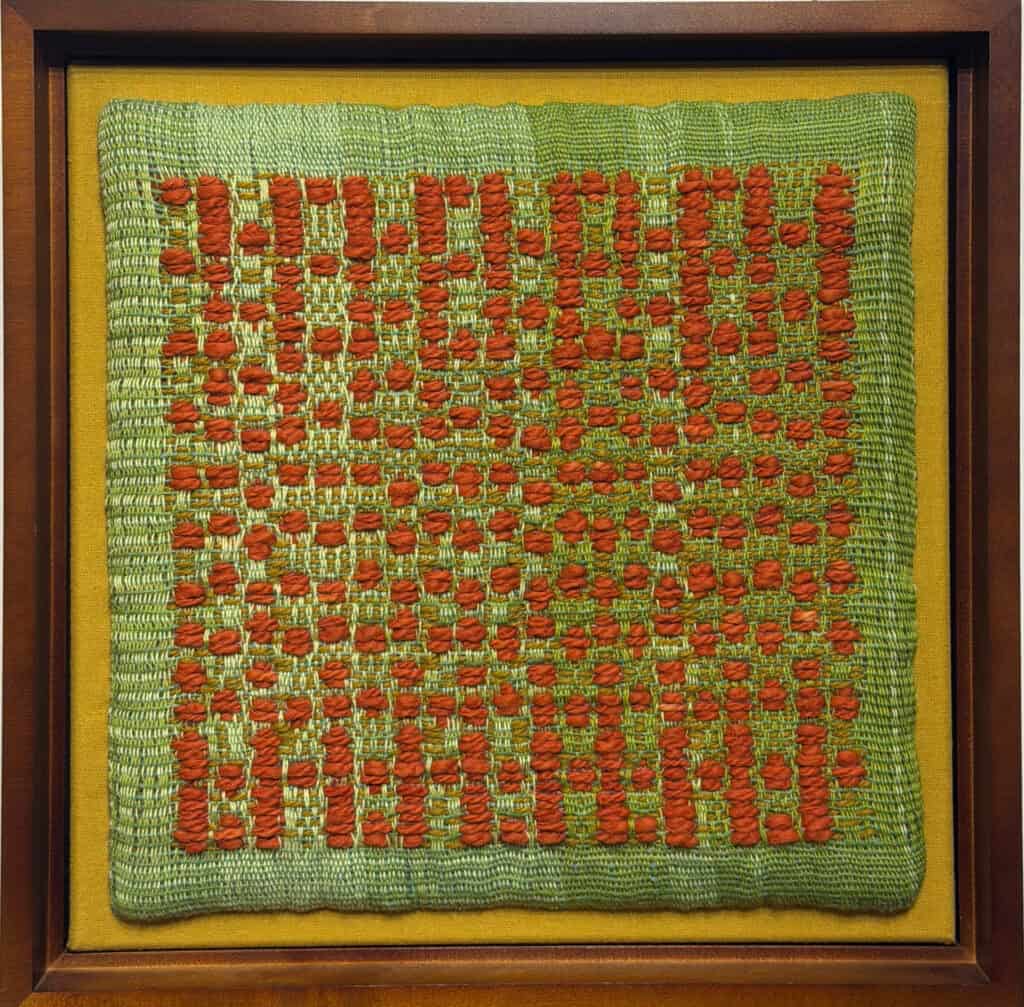
Kimberly English, Tadpole Hunt, 2026, hand-dyed, handwoven cotton and wool. © Kimberly English. Courtesy Arcadia Art Consultancy.

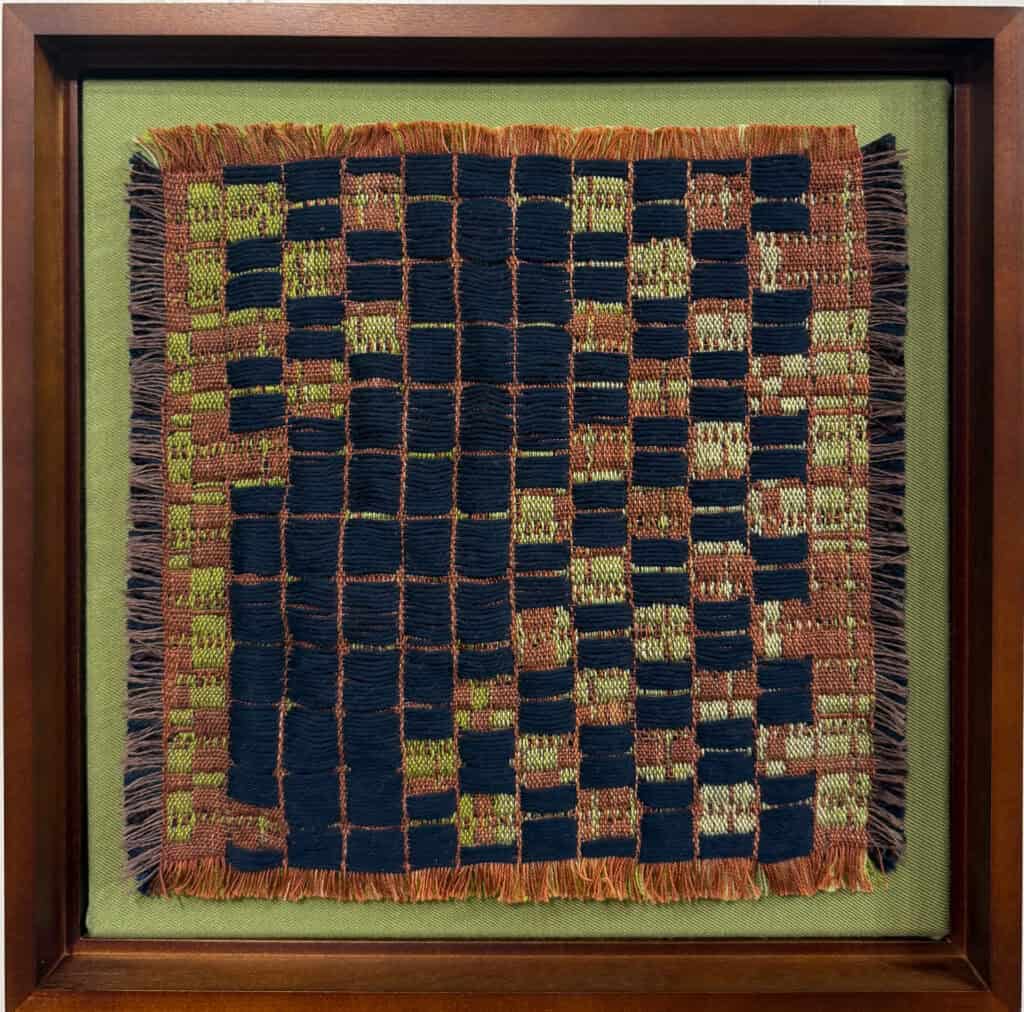
Kimberly English, Rumble Strip, 2026, handwoven cotton and wool. © Kimberly English. Courtesy Arcadia Art Consultancy.

Related Exhibitions

Related Exhibitions

Artist Erin Canady Prefers Materials Outside of Her Control

Artist Erin Canady Prefers Materials Outside of Her Control

The Asheville-based visual artist captures the effects of time through works that include water and graphite.

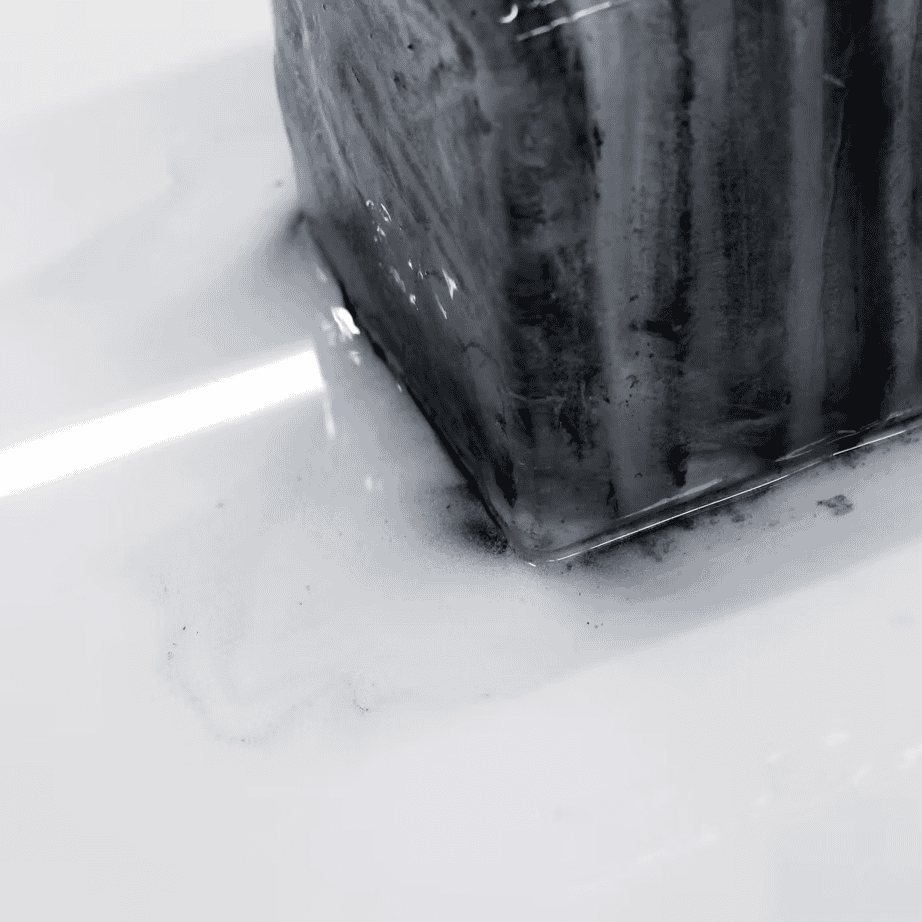
Erin Canady’s artistic practice centers on themes of temporality, meditation, ritual, and futility. She traces the visible effects of time on surfaces, bodies, and places. Canady’s work often brings together natural materials such as graphite, dirt, ice, and found fabrics, creating a reaction and releasing the materials to the passage of time. Her Temporary Objects are created by setting powdered graphite in layers of ice, where the water moves slowly across space, redrawing what it touches.

In 2008, Canady left the United States and traveled to Bangkok, Thailand, to study Buddhism at the Thammasat University. Canady often refers to the teachings of Buddhism, particularly Daoism, as driving forces in her works. Daoism focuses on simplicity, naturalness, and Wu-Wei (action through inaction), teaching followers to accept and flow with the natural order of the universe rather than struggle against it.

Find works by Canady in Process as Practice: Three Artists from Western NC, on view at NCMA Winston-Salem Downtown from September 17 until November 29, 2026.

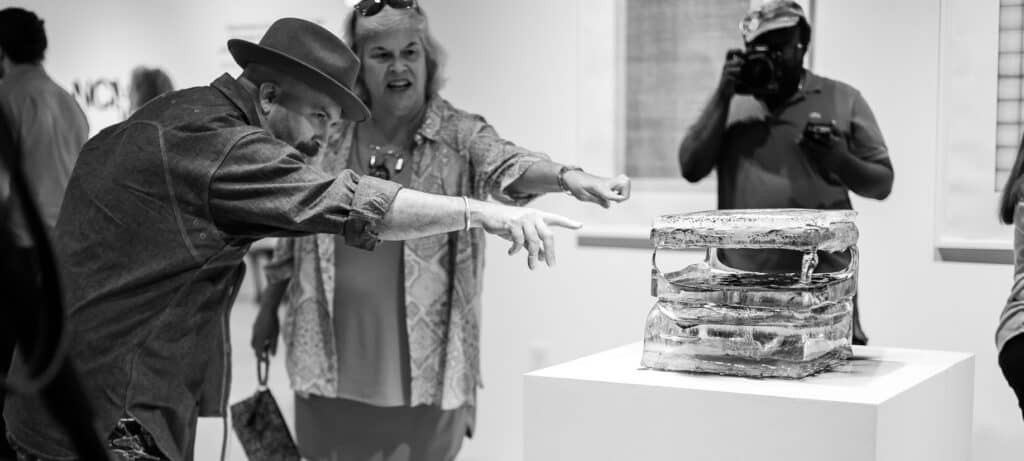
Ice sculpture intervention by Erin Canady at NCMA Winston-Salem Downtown

IN WHAT WAYS DO YOUR ARTISTIC PRACTICE AND YOUR PERSONAL IDENTITY INFLUENCE EACH OTHER?

I don’t think I could separate the two. I have always been an observer, a slow processor; it’s a big part of my identity and also my work. When I observe the world around me, what strikes me the most is how urgent and fast paced it all seems to be, and how I desperately want it to be the opposite of that. But nobody can control the ebbs and flows of the world moving around them, and I try to hold that thought with me as I walk through my daily life.

I like to play with that lack of control in my art as well, through my materials and processes. I like to use materials that have a bit of a mind of their own, water and ice, for example. I can manipulate them and use them for a drawing, but ultimately they will melt and flow in a way that I have no say over, and I love that. I can be the catalyst for the idea, and I can set boundaries for what happens, but I can’t know exactly what the final piece will look like. And I think the visuals produced require slow observation from the viewer, which also reflects how I see my own identity. 

WHAT ARE YOU LEARNING ABOUT YOURSELF THROUGH YOUR ARTISTIC PRACTICE?

Through my art practice, I am learning to appreciate the process just as much as the result (both in art making and in life). My process is my art and my art is my process, and I become more aware every day that I really can’t separate the two. Among other things, this helps me be in the moment more. It’s almost like a life-long meditation.

IF YOU FEEL STUCK CREATIVELY, WHAT DO YOU DO NEXT?

Doing anything that isn’t art related always helps me get unstuck. I get stuck when I am thinking about art too much or too deeply. My work is about the ways we move through life, so I have to move through life to feel inspired. I remember in grad school I would feel the most inspired when I was running because of how much it cleared my head. I have also felt extremely inspired when I am traveling because of the fresh perspective that brings. But even just daily life can be inspiring if I am in-the-moment enough. I hyper-focus when I am actually making art, but in order to get to that point I have to bring all of my other experiences to it.

Erin Canady, Temporary Object I, 2016, ice and graphite on wood panel. © Erin Canady. Courtesy of the artist.
Erin Canady, (H)our 2, 2018, melted ice and graphite on paper. © Erin Canady. Courtesy of the artist.
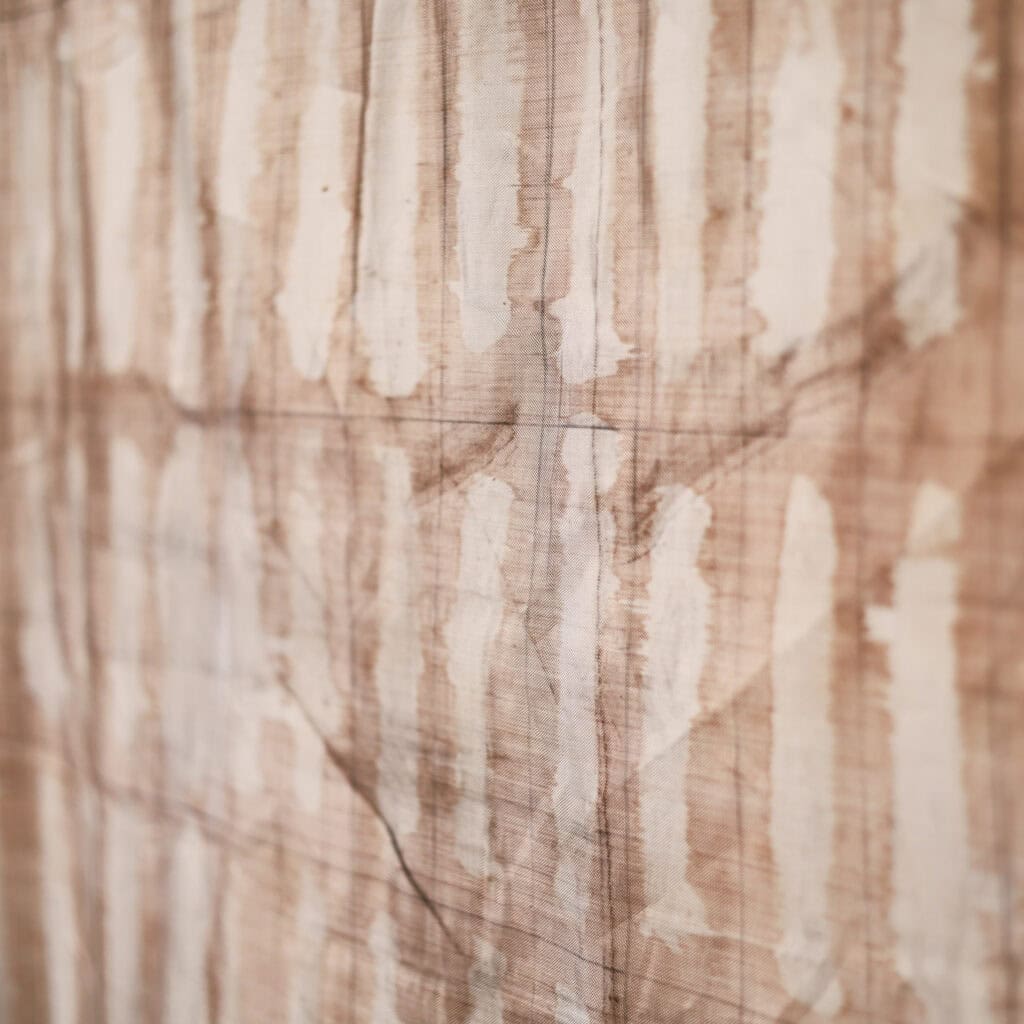
Erin Canady, Calendar (detail), 2015, bleach and graphite on found fabric. © Erin Canady. Courtesy of the artist.

Related Exhibitions

Related Exhibitions

Mobile and Modular: Portable Gallery Brings Museum-Quality Art to Local Classrooms

Mobile and Modular: Portable Gallery Brings Museum-Quality Art to Local Classrooms


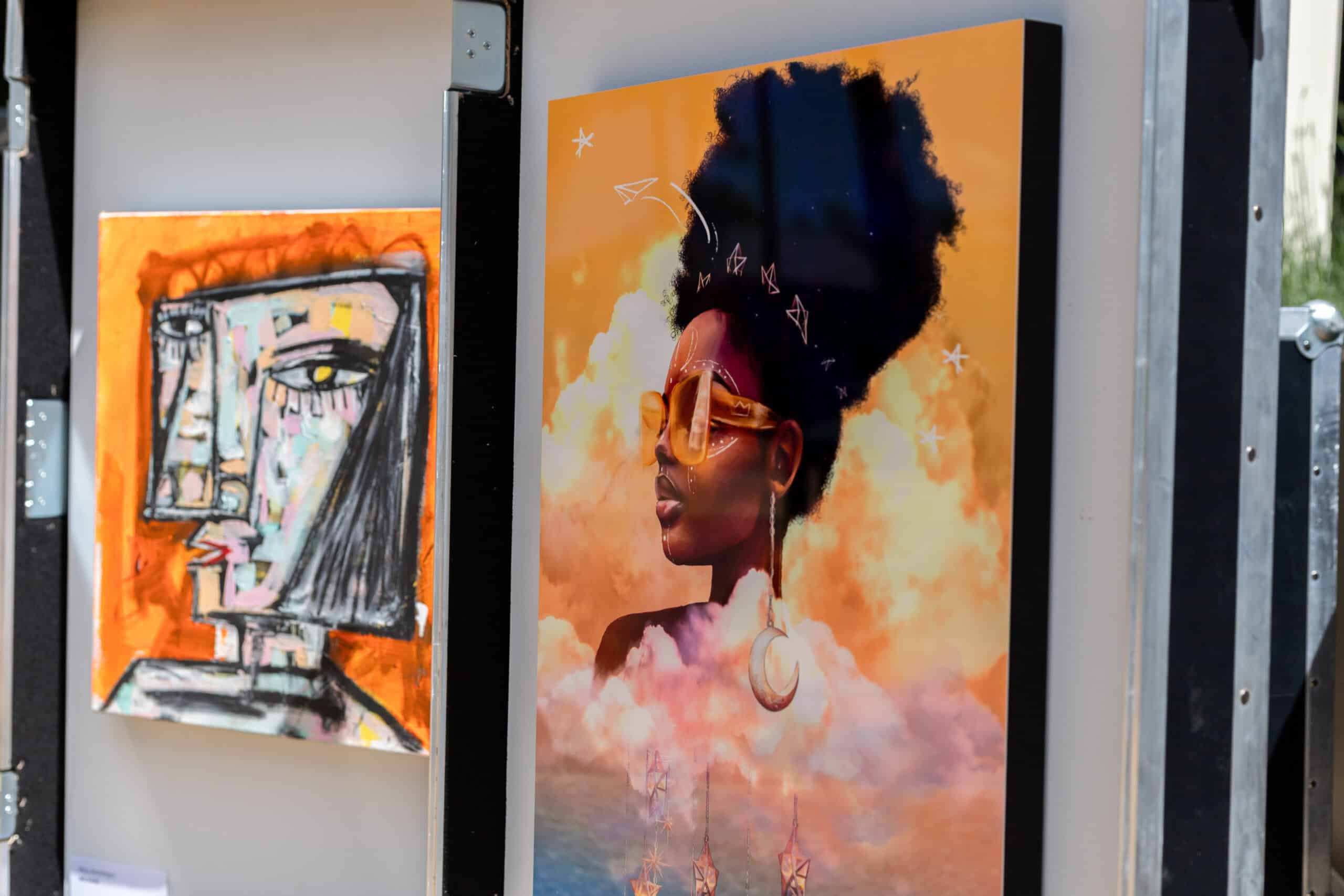
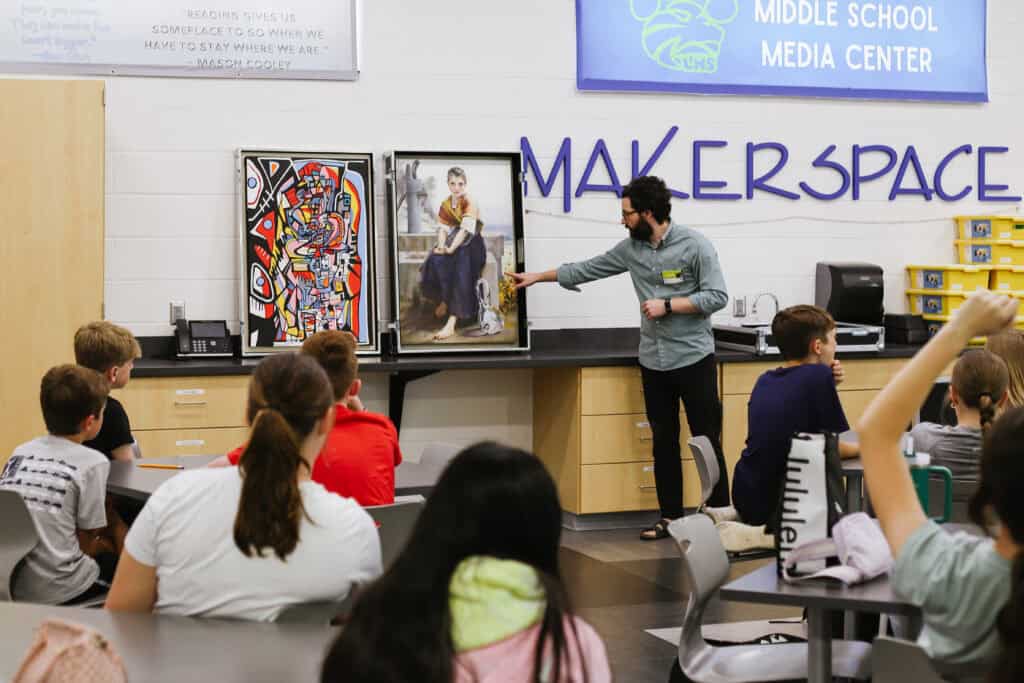
The NCMA Winston-Salem’s Portable Gallery was launched in October 2021 with a clear goal to bring original artworks by North Carolina artists to students who might not otherwise have access to them. What began with two paintings by Winston-Salem artists has grown to 29 works representing 19 artists from across the state. Today, the Portable Gallery includes paintings, prints, photographs, ceramics, works on paper, and sculpture, offering students opportunities to engage with contemporary artistic voices that are actively shaping North Carolina’s culture.

Rather than asking schools to travel to the Museum, which can present a challenge for rural and under-resourced communities, the Portable Gallery delivers museum-quality art and educational experiences directly to classrooms throughout the Piedmont. For many students these encounters are their first experience with contemporary art and an all-too-rare opportunity to engage with art outside of screens and reproductions. Since its creation 273 classes and 7,428 students have participated in Portable Gallery programs. Behind each of those numbers is a conversation sparked by an abstract composition, a moment of joyful discovery born from looking slowly at a surrealist landscape, a thoughtful question about the subject of a bold cubist portrait, or a new connection between a student and their classmates.

Looking ahead, the next phase of the Portable Gallery will further deepen its educational impact. Beginning in the 2026–27 school year, the program is going to include longer-term exhibitions installed in school common areas for up to eight weeks at a time. Students will have daily access to contemporary art, and educators from all disciplines will have the chance to more fully integrate Portable Gallery artworks into their classroom instruction.

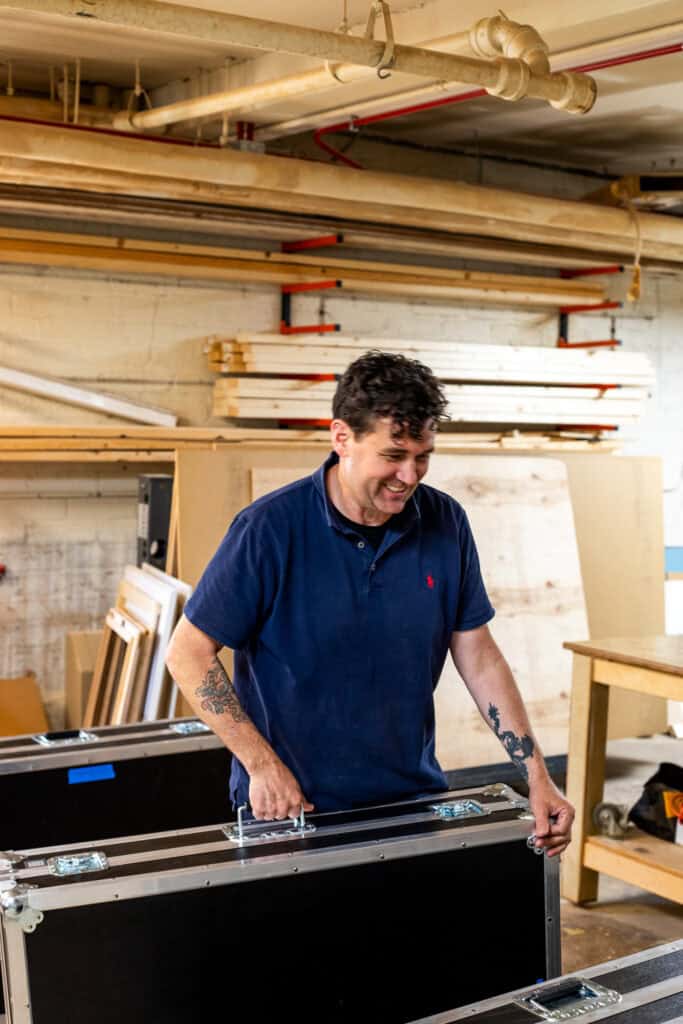
The success and expansion of the Portable Gallery have required more than paintings and a clear goal; they have depended on people behind the scenes who have helped build and refine the program. One of those individuals is Jeff Crawford, head of art services at the NCMA W-S, whose contributions continue to shape the Portable Gallery’s evolution.

“The core message of the Portable Gallery is that students deserve meaningful access to art,” Crawford says. “By bringing art into classrooms, this program transforms them into spaces where curiosity, creativity, and self-expression can flourish. Personally, I find this project highly commendable. From its community outreach to its focus on empowering young minds, it provides opportunities that many of us in the art world may not have had during our formative years, when access to museums and artistic experiences can shape perspectives and inspire lifelong engagement with art.”

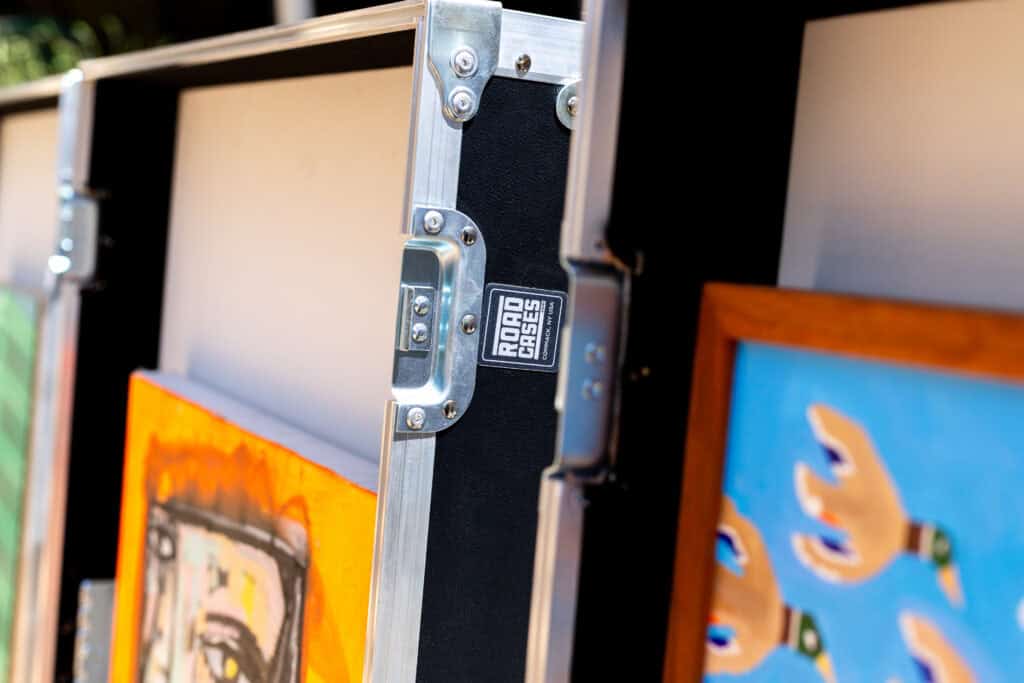
Shortly after joining the NCMA W-S, Crawford was asked to help redesign the Portable Gallery cases to improve their ease of use and functionality. Each case holds two artworks, which can be interchanged to create different thematic pairings. Previously, the artwork had been mounted directly onto wooden panels, which were then bolted to the cases. Crawford relates, “This method worked, but it was cumbersome and made swapping out the artwork a time-consuming process requiring specialized tools. To address this, I developed a new mounting system that drastically improved interchangeability, is non-invasive, and meets museum standards.” Changing the artwork now requires no tools and can be completed in just a few minutes. Crawford redesigned and standardized the mounting panels, and each is now equipped with custom-built locking mechanisms that attach securely to the cases. A key is used to unlock the panels, allowing the artwork to be easily removed or swapped.

“Through this project I was able to directly support the Portable Gallery’s mission, ensuring that artworks can travel safely and continue to inspire students wherever they go,” says Crawford. “Contributing in this way reinforced for me how thoughtful design and careful planning behind the scenes can create meaningful access to art, fostering engagement with creativity.”

As the Portable Gallery grows, its success will be measured by more than the number of artworks in the program or number of students reached. Its true impact can be found in the moments of curiosity, connection, and serendipity it creates—a student seeing themselves reflected in an artwork, a classroom being challenged to think and communicate in new ways, a young person realizing that art is alive, not something static that’s observed passively. With each new artwork, school, and student, the Portable Gallery demonstrates that meaningful encounters with art belong everywhere.

“We Belong Here: The Gutierrez Collection” Opens Oct. 23

“We Belong Here: The Gutierrez Collection” Opens Oct. 23, 2025

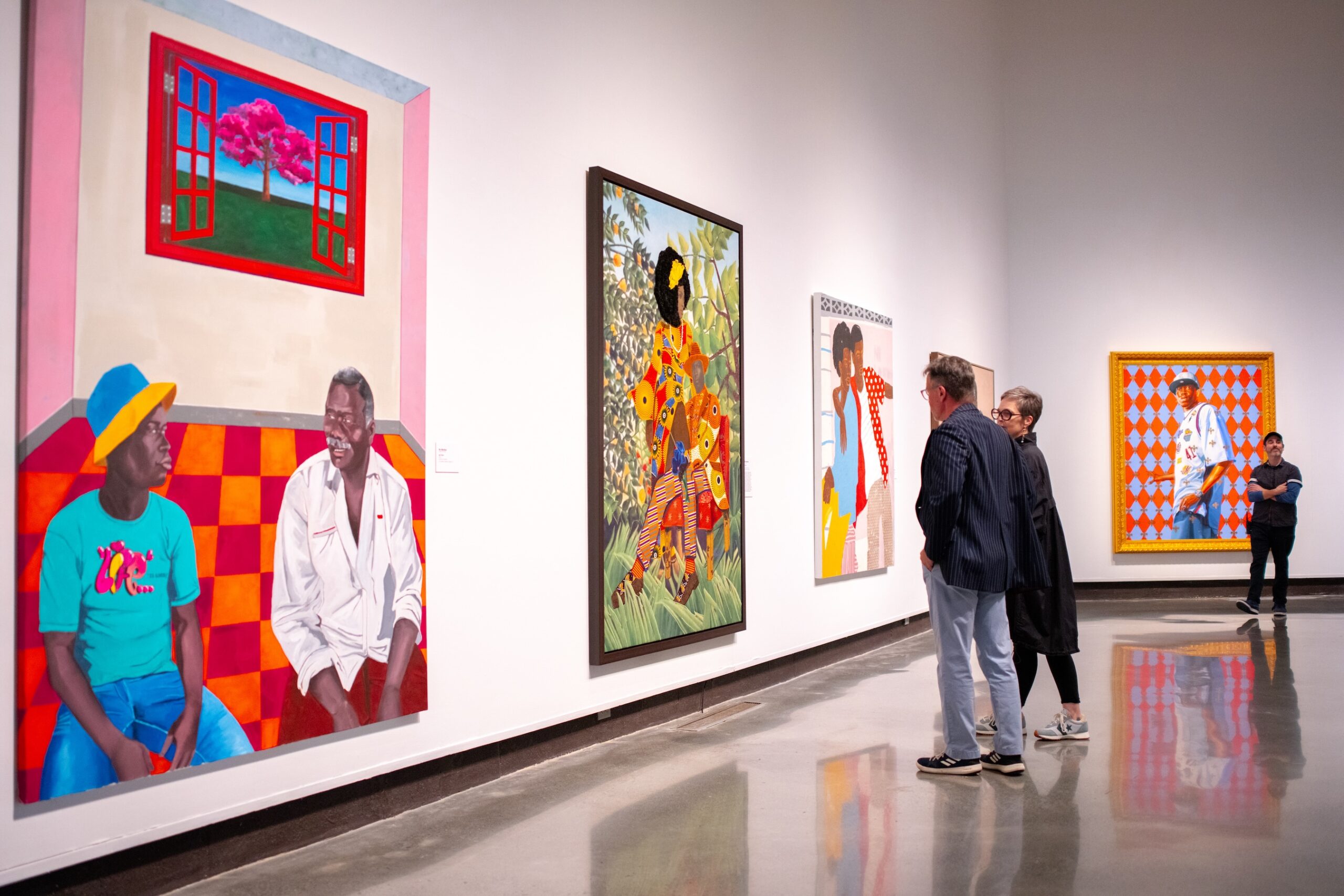
(Winston-Salem, N.C.) – The North Carolina Museum of Art, Winston-Salem (formerly SECCA) is proud to present We Belong Here: The Gutierrez Collectionon view Oct. 23 through Dec. 27, 2025 in Main Gallery at NCMA Winston-Salem. An opening reception will be held Thursday, Oct. 23 from 6 p.m. to 8 p.m. The museum is part of the N.C. Department of Natural and Cultural Resources.

We Belong Here: The Gutierrez Collection is the first public exhibition of a collection of contemporary art built over the past decade by North Carolina-based collectors Onay Gutierrez and Jeff Childers. In their words, “The Gutierrez Collection aims to create a space where art becomes a platform for dialogue and understanding across a broad spectrum of identities and perspectives.”

We Belong Here features over 40 works created in the 21st century by over 40 international contemporary artists working in a broad range of media, engaged with current social, political, cultural, and personal issues. Artists include Anthony Akinbola, Saif Azzuz, Monica Kim Garza, Jeffrey Gibson, Hayv Kahraman, Beverly McIver, Zanele Muholi, Angel Otero, Deborah Roberts, Tavares Strachan, Mickalene Thomas, and Kehinde Wiley, among many others.
 
“This powerful exhibition celebrates the global voices of contemporary artists and asserts that everyone has a place in the story of art,” said Linda Dougherty, Chief Curator and Senior Curator of Contemporary Art at the NCMA. “We Belong Here provides a rare opportunity to see works by international contemporary artists whose works are not often on view in the U.S.”

Gutierrez and Childers, who began their collection in 2015, describe their collecting philosophy as “revolving around the contemporary cultural landscape of their time through a cross section of artistic voices primarily from underrepresented communities.” As collectors, they prioritize artists who deviate from traditional or expected approaches to their medium, and who employ unique techniques to convey specific narratives. Their collection reflects contemporary ideas around mental health; LGBTQ rights; Latin/Latinx, African, and African Diasporic identities; as well as broader explorations of activism, protest, and civil disobedience.

This exhibition is made possible through the support of Onay Gutierrez and Jeffrey Childers and is co-organized with the Cameron Art Museum/CAM in Wilmington, N.C. On view at CAM: April 23-Sept. 7, 2025; on view at the NCMA Winston-Salem Oct. 23-Dec. 27, 2025.

“Brandon Sadler: The Path of Totality” Opens July 10

“Brandon Sadler: The Path of Totality” Opens July 10, 2025

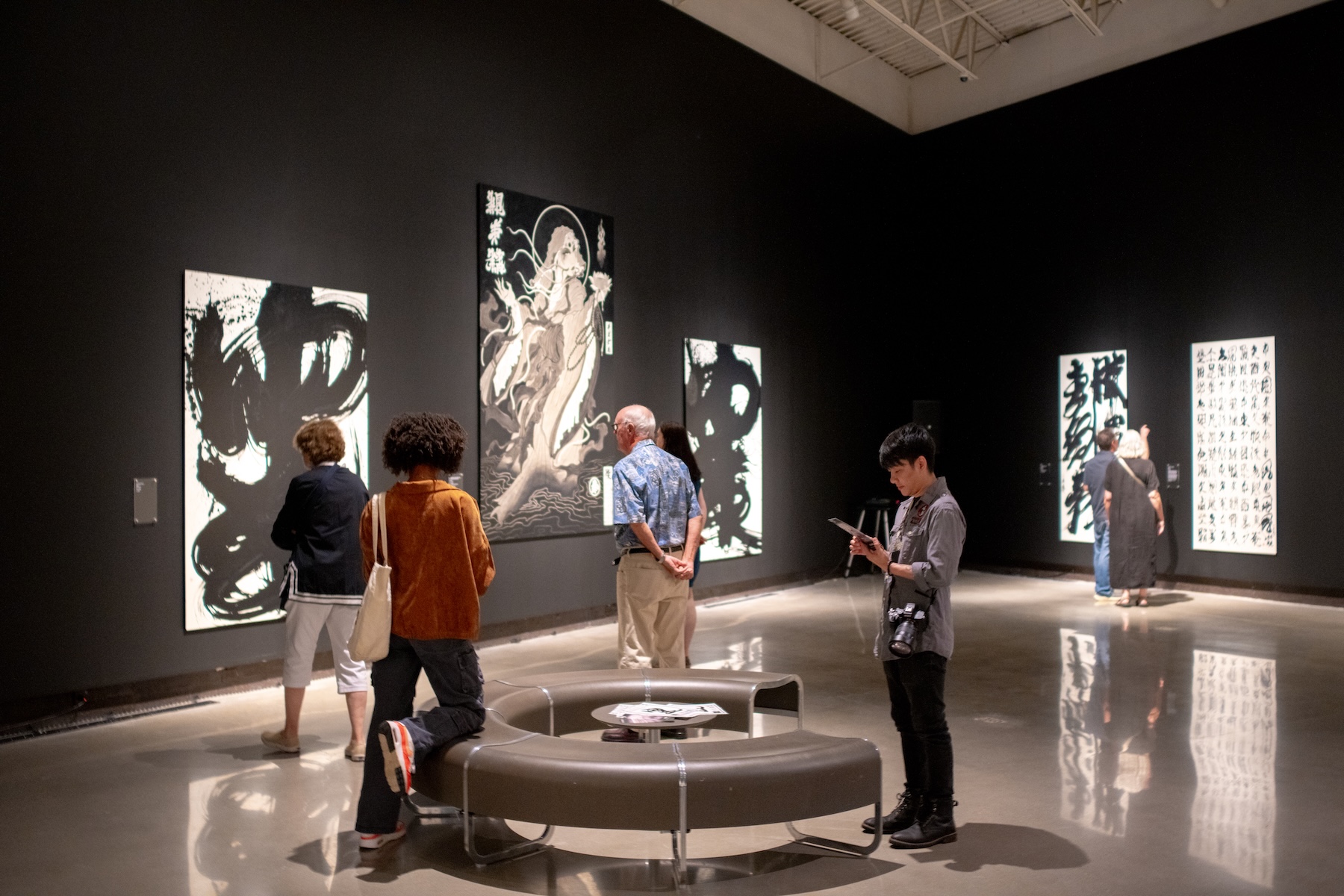
(Winston-Salem, N.C.) – North Carolina Museum of Art, Winston-Salem (formerly SECCA) is proud to present “Brandon Sadler: The Path of Totality, Chapter One – Bathed in Shadow,” on view July 10 through Dec. 27, 2025 in Potter Gallery at NCMA Winston-Salem. An opening reception with the artist and curator will be held Thursday, July 10 from 6 p.m. to 8 p.m., with remarks at 6:30 p.m. The museum is part of the N.C. Department of Natural and Cultural Resources.

“The Path of Totality” is an ongoing episodic narrative series made up of figurative and calligraphic works that reflect Sadler’s diverse passion for storytelling, ink painting, and East Asian art forms. By adapting “shufa,” the art of Chinese brush character writing, he transforms the gallery into an immersive journey of mastering a medium through the Three Perfections: poetry, painting, and calligraphy.

Inspired by Sadler’s passion for world-building that combines calligraphy with figurative painting, “The Path of Totality” explores a mythical universe inhabited by beings who can cultivate cosmic energy and create realities through written language. With several newly created paintings by the artist, “Chapter One – Bathed in Shadow” specifically investigates the concept of supreme love, an all-encompassing and ever-expanding force that permeates everything beyond space and time.

“This exhibition is a culmination of Brandon’s work over the past few years, emphasizing his cross-cultural storytelling and world-building,” said Maya Brooks, associate curator of Contemporary Art at the NCMA. “I’m excited for our audience to get to know Brandon, because many have probably seen his work in popular settings (Marvel’s Black Panther and his public murals), but they may not have seen his work in a more immersive exhibition. I’ve personally appreciated working with Brandon because he has a very clear vision and understanding of his practice that translates to the overall narrative of ‘The Path of Totality.’”

ABOUT THE ARTIST
Brandon Sadler is a multi-disciplinary artist based in Atlanta, Georgia. He graduated from the Savannah College of Art and Design (SCAD) with a BFA in Illustration. Sadler is renowned for his calligraphy, public murals, and performance art. In addition to contributing to fine arts institutions, he has partnered with several major brands and commercial ventures, including a feature in Marvel Studios’ Black Panther film series.

“Brandon Sadler: The Path of Totality” is curated by Maya Brooks and organized by the North Carolina Museum of Art. This exhibition is made possible, in part, by the North Carolina Department of Natural and Cultural Resources; the North Carolina Museum of Art Foundation, Inc.; and the William R. Kenan Jr. Endowment for Educational Exhibitions. Research for this exhibition was made possible by Ann and Jim Goodnight/The Andrew W. Mellon Foundation Fund for Curatorial and Conservation Research and Travel.