
Kimberly English’s Creative Practice is Inspired by Ecological Processes and Southern Identity
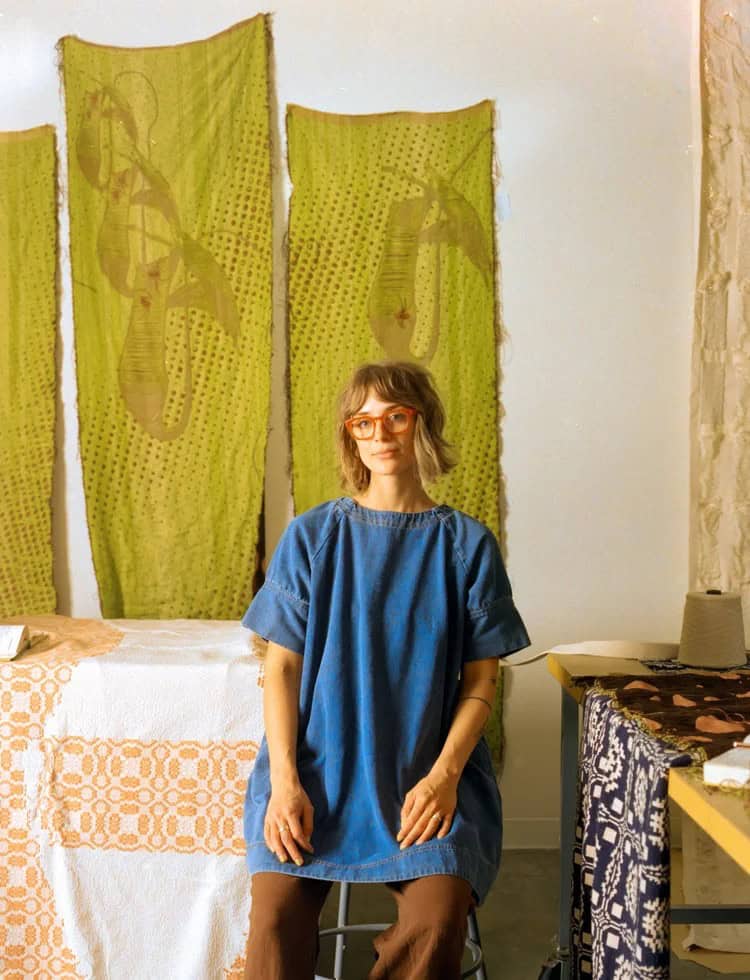
The Asheville-based artist brings together traditional Southern Appalachian weaving practices to explore individual and collective identities.
Kimberly English grew up in rural Georgia with craft hobbyist parents who inspired her exploration of material-based art. During her time at SCAD, English took a fiber class and found a format to think through thread. Now, her works reflect southern Appalachian traditions in weaving and textile work, particularly the overshot coverlet pattern marked by a colored wool weft that floats over a neutral linen or cotton warp, with designs passed down through generations.
Through her work, English explores narratives of the American South and globalized labor through identity, patriarchy, memory, and reconciliation. Her pieces reflect on the transitional space between past and present, weaving together personal and collective memory.
Find vibrant textile works by English in Process as Practice: Three Artists from Western NC at NCMA Winston-Salem Downtown from September 17 until November 29, 2026.
OUTSIDE OF ART, WHAT IS ESPECIALLY INSPIRING TO YOU?
I’m very inspired by ecological relationships these days. I’m learning so much through witnessing the seasons change in my garden and on my homestead. Some days its a garden spider’s web, or the way the morning glory wraps its vines so persistently — all small things that I try to stay awake to.
DO YOU USE TRADITIONAL, HAND-SPUN WOOL AND NATURAL DYES IN THIS EXHIBITION, OR DO YOU CONTRAST TRADITIONAL METHODS WITH MODERN, MANUFACTURED FIBERS?
During the first few years of my practice, I made decisions based on colors and yarn weight, but recently I’ve felt a little bit more convicted in the material that I’m using as a source material. I’ve figured out what I want to say and how I want it to look, and now I need to think a bit more about the ways I want to go about it. My work has shifted towards being more about the land and about extractive practices that are rooted in the South.
I live on a homestead in Canton with my partner and our sheep, honeybees, and chickens. It’s all made me think a little bit more about my conviction as an artist and how, as you create things, there are also things that are being destroyed. If the sheep shouldn’t feed near where chemical dyes are dumped, neither should the fish down the river. I think we have responsibilities as makers to consider how things will exist into the future and what it means when they start to decay — will it be toxic for that place?
I’ve started spinning my sheep’s wool, which could be my full-time job. It is so laborious but I really love it and it makes me feel connected to the sheep and to this place that we’re stewarding for them to live on. My color palettes are heavily inspired by nature. I have a lot of naturally-growing dye plants on my property, walnuts specifically, which feels like a little wink from the universe, as if to say “let’s just try this for a bit and see how it goes.”
SOUTHERN APPALACHIAN WEAVING HAS POWERFUL FEMINIST, ECONOMIC, AND HISTORICAL IMPLICATIONS. HOW DO YOU SEE YOUR CONTEMPORARY WORK HONORING OR CRITIQUING THAT SPECIFIC LINEAGE?
I think, being from the South, I really grew up with this very specific worldview being taught to me. The more I learned about overshot weaving, the more I’m realizing that the personal and the political are connected within it. While being enamored by the formal qualities of these drafts, I am also being very critical and very clear-eyed about the research and about the implications of its history. I think in order for this craft to survive into the future, we have to be really honest with ourselves about where it came from. I’m challenging myself to talk about contemporary issues that are happening in the South while using this traditional craft that’s somewhat of a Trojan horse.
TELL US MORE ABOUT THE OVERSHOT COVERLET PATTERNS THAT INSPIRE SO MUCH OF YOUR WORK.
They were originally brought over by European immigrants, and there are so many anecdotes from oral history about how they got here. Some people speculate that, because different drafts were symbolic of class and region in the countries where they originated, they became a way for people to code switch between classes by weaving a pattern that did not belong to the class they originally came from. Social class is deeply embedded in the history. It’s all oral history, and I pay a lot of attention to those histories as a way for me to imagine how these were being named, but also as a kind of speculative endeavor, too.
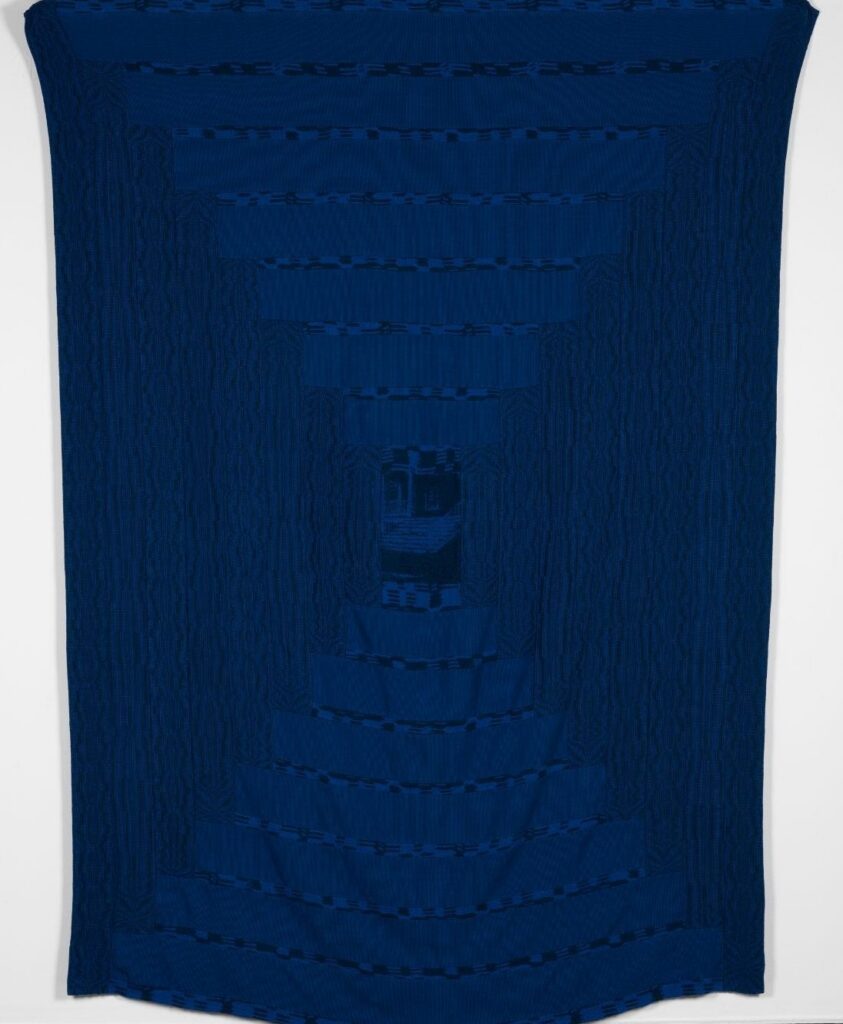
Kimberly English, Lee’s Surrender, 2024, handwoven cotton. © Kimberly English. Courtesy of the artist.
One of the most well-known weaving drafts is called Lee’s Surrender. Novelist Eliza Calvert Hall takes the perspective of talking to the draft and she’s asking it “Were you named in sorrow, or were you named in triumph?” Her writings really gave me a voice to continue the conversation about these things that exist even if the historical documentation isn’t there, and to believe the oral histories or give them a leg to stand on as I’m thinking through how they operate today.
IN WHAT WAYS DO YOUR ARTISTIC VOICE AND YOUR IDENTITY INFLUENCE EACH OTHER?
As a contemporary craftsperson born and raised in the south, I think a lot about the idea of “tradition”. My work toggles between traditional and experimental approaches to working with cloth. I find myself returning to the same questions in and outside of the studio: What has been inherited? What is worth keeping? What should be challenged?
WHAT ARE YOU LEARNING ABOUT YOURSELF THROUGH YOUR ARTISTIC PRACTICE?
I am learning how to be a friend to myself, how to ask and wrestle with hard questions, how to be content in the grey area, and how to challenge the urge for efficiency and engage with the extent of my process for as long as it may take.
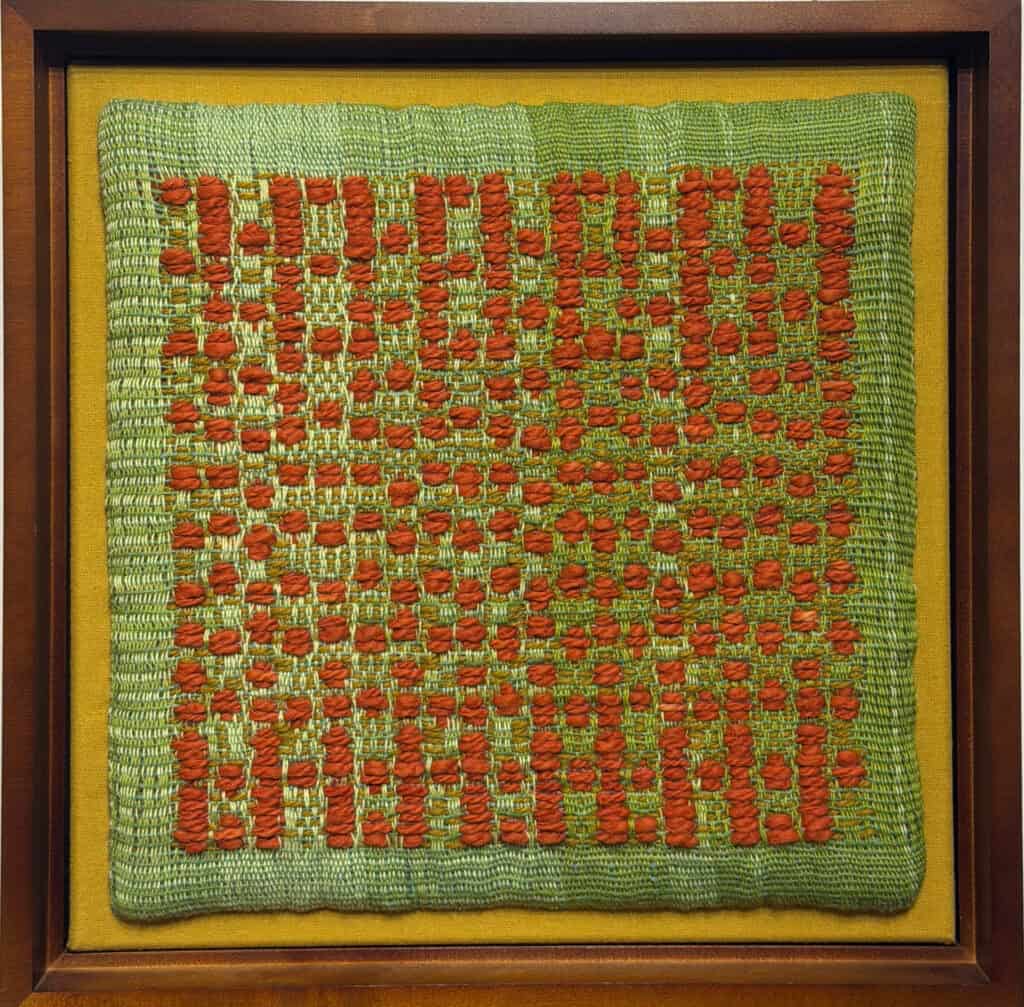
Kimberly English, Tadpole Hunt, 2026, hand-dyed, handwoven cotton and wool. © Kimberly English. Courtesy Arcadia Art Consultancy.
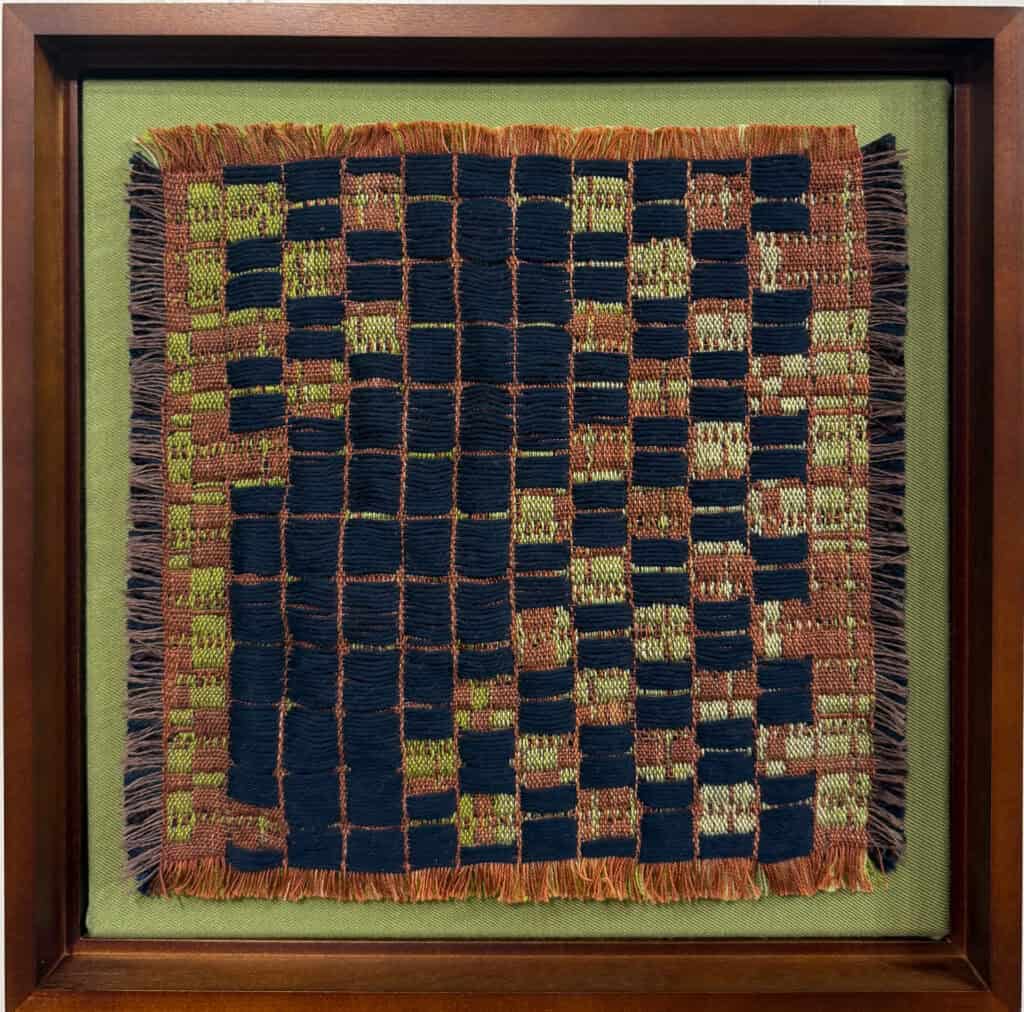
Kimberly English, Rumble Strip, 2026, handwoven cotton and wool. © Kimberly English. Courtesy Arcadia Art Consultancy.
